CDL HazMat Endorsement: 2026 Requirements Explained
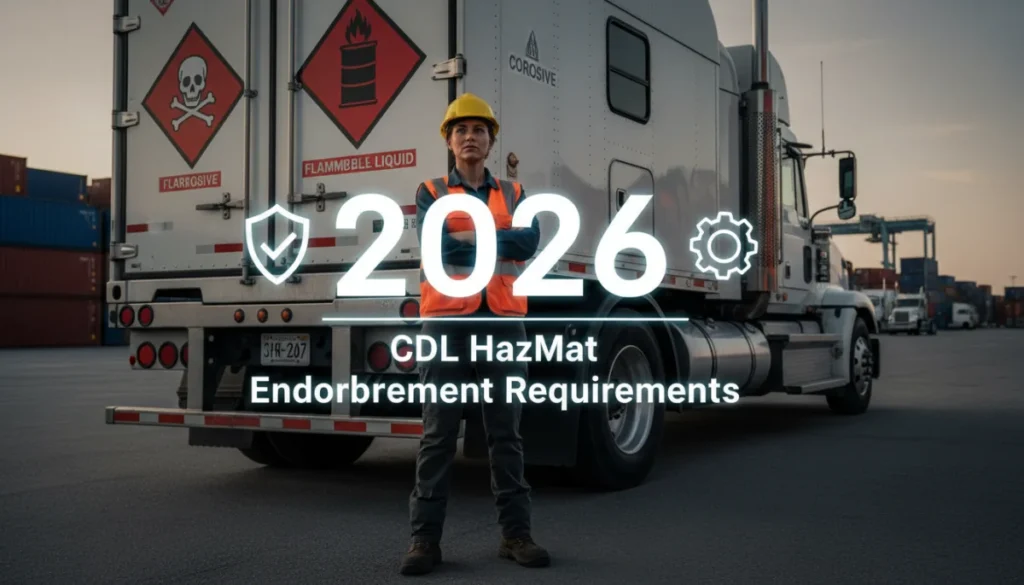
The 2026 CDL HazMat endorsement requirements are set to introduce significant changes, including enhanced training protocols and updated background check procedures, impacting all commercial drivers transporting hazardous materials across the United States.
Are you a commercial driver tasked with transporting hazardous materials? Then understanding the latest CDL HazMat Endorsement 2026 requirements is not just important, it’s absolutely critical for your career and compliance. The landscape of hazardous materials transportation is constantly evolving, with new regulations designed to enhance safety and security. Staying informed about these changes is key to avoiding penalties and ensuring smooth operations.
understanding the new regulatory landscape
The year 2026 brings forth a series of significant updates to the federal regulations governing the Hazardous Materials (HazMat) endorsement for Commercial Driver’s Licenses (CDL). These changes are primarily driven by the Federal Motor Carrier Safety Administration (FMCSA) and aim to bolster safety measures and address evolving security concerns in the transportation of dangerous goods. Familiarizing yourself with these modifications now will provide a crucial advantage.
These regulatory adjustments touch upon various aspects of the endorsement process, from initial application to ongoing compliance. The goal is to ensure that every driver holding a HazMat endorsement possesses the most current knowledge and undergoes rigorous screening, thereby minimizing risks associated with transporting volatile substances. It’s a proactive step towards a safer trucking industry for everyone.
key changes in federal legislation
Several legislative acts and amendments have paved the way for the 2026 requirements. These include refinements to existing statutes and the introduction of new mandates that emphasize comprehensive training and more stringent background checks. The focus remains on preventing unauthorized access to hazardous materials and ensuring that only qualified individuals are entrusted with their transport.
- Enhanced security threat assessments by the Transportation Security Administration (TSA).
- Mandatory entry-level driver training (ELDT) specific to HazMat.
- Stricter requirements for renewal processes and periodic re-evaluation.
- Increased emphasis on understanding emergency response protocols.
Ultimately, these legislative shifts reflect a national commitment to public safety and environmental protection. Drivers must recognize that these aren’t arbitrary hurdles but essential safeguards designed to protect communities and infrastructure from potential hazards. Compliance is not merely a legal obligation, but a professional responsibility.
enhanced training requirements for 2026
One of the most impactful changes coming in 2026 for the CDL HazMat endorsement is the overhaul of training requirements. The FMCSA has mandated more comprehensive and structured training programs, moving away from previous, less standardized approaches. This ensures that all drivers receive a consistent, high-quality education on hazardous materials handling, regulations, and emergency procedures.
These new training mandates are part of the Entry-Level Driver Training (ELDT) regulations, which have been incrementally implemented. For HazMat, this means dedicated coursework that covers a broader spectrum of topics, preparing drivers not just for passing an exam, but for real-world scenarios. The emphasis is on practical knowledge and critical decision-making in potentially dangerous situations.
mandatory entry-level driver training (ELDT) for hazmat
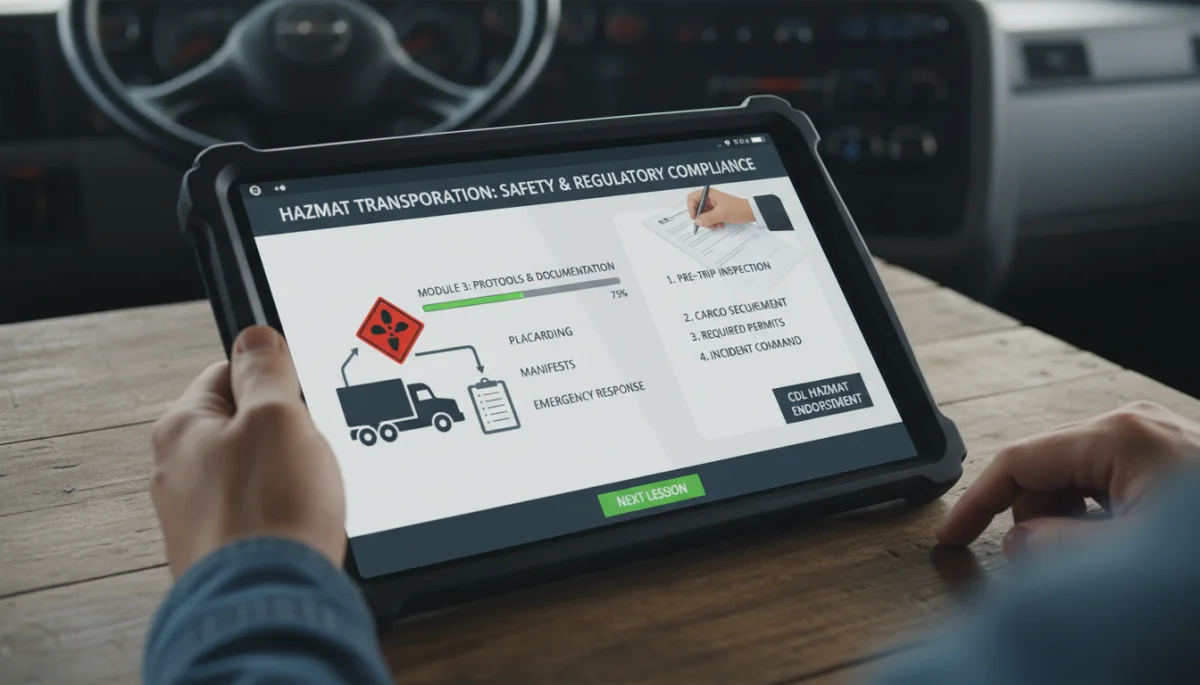
Under the 2026 rules, aspiring HazMat endorsement holders must complete specific ELDT curriculum from a training provider listed on the FMCSA’s Training Provider Registry. This curriculum is designed to impart essential knowledge and skills that go beyond basic CDL requirements. It’s about specialized expertise for a specialized job.
- Classification and identification of hazardous materials.
- Packaging, marking, and labeling requirements.
- Placarding rules and regulations.
- Loading and unloading procedures for various hazardous substances.
- Emergency response and incident reporting protocols.
This structured training ensures that every driver understands the inherent risks and proper mitigation strategies associated with hazardous cargo. It’s an investment in safety, both for the driver and the public. Drivers who have previously held a HazMat endorsement may still need to undergo refresher training or demonstrate compliance with the new ELDT standards, depending on their renewal cycle and state specifics.
updated background check and security threat assessments
The security aspect of transporting hazardous materials remains a paramount concern, and the 2026 requirements reflect this with updated background check and security threat assessments processes. These measures are in place to prevent individuals who pose a security risk from obtaining a HazMat endorsement, thereby safeguarding national security and public safety. The Transportation Security Administration (TSA) plays a central role in these assessments.
Drivers seeking to obtain or renew their HazMat endorsement will continue to undergo a thorough background check, which includes a review of criminal history, immigration status, and other relevant records. However, the 2026 updates may introduce more streamlined procedures or enhanced data sharing between agencies to make these assessments more efficient and effective, without compromising their rigor.
what drivers can expect during the process
The application for a HazMat endorsement involves several steps, and drivers should be prepared for each one. This typically includes submitting fingerprints, providing personal identification, and authorizing the release of information for background checks. The process is designed to be comprehensive and may take several weeks to complete, so early application is always advised.
- Submitting an application to the TSA, often online or through designated enrollment centers.
- Providing biometric data, primarily fingerprints, for criminal history record checks.
- Undergoing a security threat assessment conducted by the TSA.
- Receiving notification of eligibility or ineligibility from the TSA.
It’s crucial for drivers to ensure all information provided is accurate and up-to-date to avoid delays. Any discrepancies or incomplete details can significantly prolong the background check process. Understanding the requirements and preparing all necessary documentation in advance will help facilitate a smoother experience. This thorough vetting process is a critical layer of protection for everyone.
state-specific variations and compliance
While federal regulations provide the overarching framework for the CDL HazMat endorsement, it’s important to remember that individual states may implement their own specific requirements or procedures. These state-level variations can sometimes add layers of complexity, making it essential for drivers to consult their state’s Department of Motor Vehicles (DMV) or equivalent agency for precise information regarding the 2026 updates.
These state-specific rules often pertain to application processes, renewal frequencies, and even additional training modules that might be unique to a particular state’s infrastructure or industrial needs. A driver operating across multiple states must ensure compliance with all relevant state regulations, not just the federal mandates. This patchwork of regulations necessitates careful attention to detail.
navigating diverse state requirements
To avoid any compliance issues, drivers should proactively research the specific HazMat endorsement requirements in their state of domicile, as well as any states they frequently operate within. State DMVs typically provide comprehensive guides and resources online, detailing their unique processes and any additional prerequisites beyond federal standards.
- Check your state’s DMV website for HazMat endorsement specific information.
- Be aware of any state-mandated training courses or examinations.
- Understand state-specific renewal cycles and deadlines.
- Confirm if your state has adopted any unique security protocols for HazMat drivers.
Remaining current with both federal and state-level regulations is a continuous responsibility for HazMat drivers. Ignoring state-specific nuances could lead to fines, license suspensions, or even revocation of the HazMat endorsement. Therefore, a proactive and diligent approach to understanding these diverse requirements is paramount for maintaining a valid and compliant CDL.
impact on current hazmat endorsement holders
For drivers who currently hold a HazMat endorsement, the 2026 changes will undoubtedly bring new considerations. It’s not just about new applicants; existing endorsement holders will also need to adapt to the evolving regulatory environment. The primary concern for current holders will be understanding how these new requirements affect their renewal process and any potential need for updated training or re-certification.
Many of the upcoming changes are designed to elevate the standard of HazMat transportation across the board, meaning that even experienced drivers may need to refresh their knowledge and skills to align with the latest best practices and regulatory mandates. The goal is continuous improvement, ensuring that all drivers, regardless of experience, are operating at the highest level of safety and compliance.
renewal process adjustments
The renewal process for the HazMat endorsement is expected to see some adjustments in light of the 2026 requirements. While the core elements of background checks and security threat assessments will likely remain, there may be new stipulations regarding proof of ongoing training or a demonstration of updated knowledge. This could mean completing specific online modules or attending refresher courses.
- Verify your endorsement expiration date and plan for renewal well in advance.
- Inquire about any new training requirements for existing HazMat endorsement holders.
- Be prepared for potentially more frequent background checks or security updates.
- Stay informed about any grace periods or transitional rules implemented by the FMCSA or your state.
Proactive engagement with these changes is crucial for current HazMat endorsement holders. Waiting until the last minute could result in a lapse of your endorsement, preventing you from legally transporting hazardous materials. Staying informed through official channels and industry associations will help ensure a seamless transition into the new regulatory landscape.
preparing for the 2026 hazmat endorsement exam
Successfully navigating the 2026 HazMat endorsement exam will require thorough preparation, given the enhanced training and updated regulatory focus. The exam is designed to assess a driver’s comprehensive understanding of hazardous materials regulations, safety protocols, and emergency procedures. It’s not merely about memorization but about demonstrating a deep comprehension of the subject matter.
With the new ELDT requirements in place, drivers will have a more structured foundation of knowledge. However, supplementary study and practice are often invaluable for excelling on the actual exam. The test will likely reflect the increased emphasis on real-world application of knowledge, moving beyond theoretical understanding to practical decision-making.
effective study strategies and resources
To prepare effectively, drivers should leverage a variety of resources. Beyond the mandatory ELDT curriculum, many state DMVs offer official study guides, handbooks, and practice tests specifically tailored to the HazMat endorsement. These resources are often the most accurate reflection of the actual exam content and format.
- Utilize official state CDL manuals and HazMat-specific sections.
- Take advantage of online practice tests and simulated exam environments.
- Review key regulations from the Hazardous Materials Regulations (HMR) found in 49 CFR Parts 100-185.
- Focus on understanding the ‘why’ behind each regulation, not just the ‘what.’
Engaging in study groups or discussions with other experienced HazMat drivers can also provide valuable insights and reinforce understanding. The goal is to build a robust knowledge base that not only helps pass the exam but also ensures safe and compliant operations on the road. A well-prepared driver is a safe and successful driver.
future outlook and continuous compliance
The 2026 CDL HazMat endorsement requirements are not an endpoint but rather a significant milestone in the ongoing effort to enhance safety and security in hazardous materials transportation. The industry is dynamic, with continuous advancements in technology, materials science, and security threats. Therefore, continuous compliance and a commitment to lifelong learning will be essential for HazMat drivers moving forward.
Regulatory bodies like the FMCSA and TSA constantly monitor the efficacy of current regulations and adapt them as needed. This means drivers should anticipate further updates and refinements beyond 2026. Staying connected with industry news, professional organizations, and official government advisories will be key to maintaining a valid and fully compliant HazMat endorsement throughout one’s career.
staying ahead in hazmat transportation
For professional drivers, maintaining a HazMat endorsement is an investment in their career. It opens up opportunities and demonstrates a commitment to specialized skills. To stay ahead, drivers should cultivate a habit of continuous learning and proactive engagement with regulatory changes. This goes beyond just renewing a license; it’s about being an expert in the field.
- Subscribe to official FMCSA and TSA newsletters and alerts.
- Participate in industry webinars and workshops on HazMat regulations.
- Network with other HazMat professionals to share insights and best practices.
- Regularly review new publications or guidance issued by regulatory agencies.
The future of HazMat transportation will undoubtedly demand even greater levels of professionalism and adaptability. By embracing these changes and committing to continuous learning, drivers can ensure they remain at the forefront of safe and compliant hazardous materials transport, contributing positively to both their careers and overall public safety.
| Key Aspect | Brief Description |
|---|---|
| ELDT Requirement | Mandatory entry-level driver training from FMCSA-approved providers for all new HazMat applicants. |
| Background Checks | Continued rigorous TSA security threat assessments for new and renewing endorsees. |
| State Variations | Drivers must check specific state-level requirements in addition to federal regulations. |
| Renewal Impact | Existing HazMat holders may face new training or re-certification during their renewal cycle. |
frequently asked questions about hazmat endorsement in 2026
The main changes involve mandatory Entry-Level Driver Training (ELDT) specific to hazardous materials, more stringent and potentially streamlined background checks by the TSA, and possible adjustments to renewal procedures for existing endorsement holders. These aim to enhance overall safety and security in hazardous materials transport.
It depends on your renewal cycle and specific state regulations. While new applicants must complete ELDT, existing holders might need to undergo refresher training or demonstrate compliance with updated knowledge standards during their renewal process. Always check with your state DMV for precise requirements.
The TSA security threat assessment, which includes fingerprinting and criminal history review, can take several weeks to complete. It’s highly recommended to apply well in advance of your CDL or endorsement expiration date to avoid any delays in transporting hazardous materials.
You should always consult your state’s Department of Motor Vehicles (DMV) or equivalent licensing agency website. They provide detailed information on specific application procedures, any additional training mandates, and renewal processes unique to your state, ensuring full compliance.
Beyond the mandatory ELDT, utilize official state CDL manuals, HazMat-specific study guides, and online practice tests. Review the Hazardous Materials Regulations (49 CFR Parts 100-185) thoroughly. Understanding the practical application of regulations is key to success.
conclusion
The upcoming 2026 changes to the CDL HazMat endorsement requirements underscore a critical evolution in the transportation industry, prioritizing safety, security, and professional competency. For both aspiring and current HazMat drivers, understanding and adapting to these new federal and state-specific regulations is not merely a bureaucratic hurdle but a fundamental commitment to responsible hazardous materials transport. By embracing enhanced training, staying vigilant with background checks, and maintaining continuous compliance, drivers can confidently navigate the roads, ensuring both their own safety and that of the communities they serve. Proactive preparation and a dedication to ongoing education will be the hallmarks of successful HazMat professionals in the years to come.
