F1 Digital Transformation: 7 Key Tech Trends by 2026
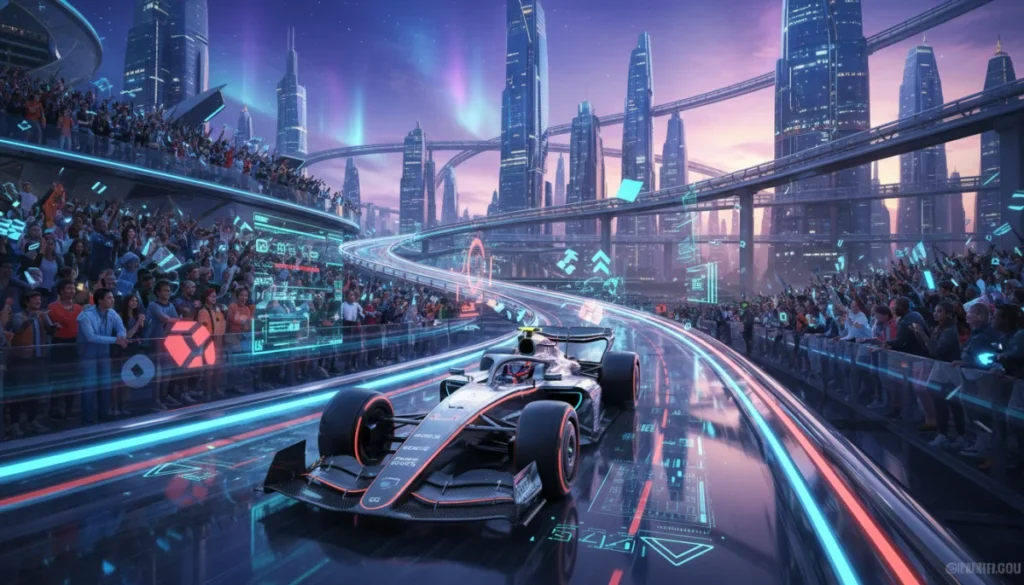
Formula 1’s digital transformation by 2026 will be defined by seven core technological trends, revolutionizing everything from car performance to fan engagement globally.
F1’s Digital Transformation: 7 Key Tech Trends Shaping the Sport by 2026 for US Audiences is not just a buzzword; it’s a profound shift impacting every facet of the sport. From the roar of the engines to the strategic calls in the pit lane, technology is rapidly evolving how Formula 1 operates, competes, and connects with its global fanbase, particularly in the burgeoning US market. This evolution promises a more thrilling, insightful, and interactive experience for everyone involved.
The Rise of AI and Machine Learning in Race Strategy
Artificial Intelligence (AI) and Machine Learning (ML) are no longer confined to the realms of science fiction; they are becoming indispensable tools in modern Formula 1. By 2026, their integration into race strategy will be even more sophisticated, offering teams unprecedented levels of insight and predictive capabilities. This allows for real-time adjustments and optimizes every critical decision made during a Grand Prix.
Teams already leverage AI to analyze vast datasets, but the future holds even greater potential. Imagine algorithms processing millions of data points simultaneously, from tire degradation and fuel consumption to competitor telemetry and weather forecasts, all to recommend the optimal pit stop window or power unit deployment strategy. This level of analysis far surpasses human capacity, leading to more dynamic and unpredictable races.
Predictive Analytics for Performance Optimization
Predictive analytics, powered by advanced ML models, will play a crucial role in maximizing car performance. These systems can forecast how different setup changes or driving styles will impact lap times and tire wear, allowing engineers to make informed decisions before a session even begins. This proactive approach minimizes risks and कैपिटizes on every marginal gain, which is vital in a sport where milliseconds separate victory from defeat.
- Real-time Data Processing: AI systems will process telemetry data instantly, providing immediate feedback to drivers and strategists.
- Optimal Strategy Simulation: ML models will run countless race simulations to identify the most effective strategies under various conditions.
- Predictive Maintenance: AI will anticipate potential mechanical failures, allowing teams to address issues before they become critical.
The strategic advantage gained from superior AI implementation will be monumental. Teams that can best harness these technologies will undoubtedly gain an edge, pushing the boundaries of what’s possible on track. This will lead to more competitive racing and a constant drive for innovation in the sport.
Enhanced Fan Engagement Through Immersive Technologies
For US audiences, F1’s appeal has surged, and immersive technologies are set to deepen this connection. By 2026, fans will experience the sport in ways previously unimaginable, moving beyond traditional broadcasts to truly feel part of the action. Virtual reality (VR), augmented reality (AR), and mixed reality (MR) will transform how fans consume and interact with Formula 1 content, creating a more personal and engaging experience.
Imagine wearing a VR headset and being transported into the cockpit of your favorite driver, feeling the G-forces (virtually) as you navigate a corner, or standing trackside as cars whiz by at incredible speeds. AR applications will allow fans to overlay real-time data onto their live viewing experience, seeing speed, tire temperatures, and driver heart rates directly on their screens. This blend of virtual and physical worlds will redefine fan interaction.
Personalized Viewing Experiences
Beyond simple immersion, these technologies will enable highly personalized viewing experiences. Fans will be able to choose their camera angles, access exclusive team radio communications, and even follow specific drivers with dedicated data streams. This level of customization caters to individual preferences, making the F1 experience more relevant and enjoyable for each viewer.
- VR Race Replays: Relive key moments from any perspective, including driver’s eye view.
- AR Data Overlays: Get real-time race statistics and driver information projected onto your living room.
- Interactive Fan Zones: Virtual spaces where fans can meet, discuss, and engage with exclusive content.
The goal is to bring fans closer to the action, breaking down the barriers between the spectator and the spectacle. This deep level of engagement is crucial for retaining existing fans and attracting new ones, particularly among tech-savvy younger demographics in the US.
The Evolution of Connectivity: 5G and Beyond
The backbone of F1’s digital transformation is robust and high-speed connectivity. The widespread adoption of 5G technology, and the emergence of its successors, will revolutionize data transfer and communication within the sport. This enhanced connectivity is critical for everything from real-time telemetry to seamless fan experiences, ensuring that data flows freely and instantly across the globe.
On race weekends, massive amounts of data are generated by each car, transmitted to the pit wall, and then often back to factory headquarters for analysis. 5G’s low latency and high bandwidth capabilities mean this data can be processed and acted upon almost instantaneously, giving teams a significant competitive advantage. It also enables the deployment of more sophisticated sensor networks and IoT devices around the track.
Impact on Broadcast and Remote Operations
The impact of advanced connectivity extends beyond the track. Broadcast quality will improve dramatically, with higher resolution streams and more dynamic camera angles becoming standard. Remote operations, where engineers at the factory provide real-time support to the trackside team, will become even more efficient and reliable, blurring the lines between physical presence and virtual collaboration.
Furthermore, the streaming of immersive content, such as VR and AR experiences, requires immense bandwidth. 5G and future networks will make these experiences smooth and lag-free, delivering on the promise of truly interactive fan engagement. The US market, with its advanced infrastructure, is particularly well-positioned to benefit from these advancements.
Sustainable Technology and Green Initiatives
As the world increasingly focuses on environmental responsibility, Formula 1 is actively embracing sustainable technology. By 2026, green initiatives will be deeply integrated into the sport’s digital transformation, not just as a marketing effort but as a fundamental aspect of its operations and future development. This commitment extends to power units, logistics, and even fan interactions, aiming for a net-zero carbon footprint.
The development of advanced biofuels and hybrid power units is a key aspect, pushing the boundaries of efficiency and reducing emissions. However, digital technologies also play a crucial role. Data analytics can optimize logistics, minimizing travel and reducing the carbon footprint of freight. Smart energy management systems at circuits can monitor and reduce energy consumption, making events more environmentally friendly.
Digital Tools for Environmental Monitoring
Digital tools will be employed for precise environmental monitoring, allowing F1 to track its impact and implement targeted improvements. This includes everything from real-time emissions tracking to intelligent waste management solutions at Grand Prix venues. The sport aims to be a leader in sustainable innovation, showcasing how high-performance industries can also be environmentally conscious.
- Biofuel Development: Continuous innovation in 100% sustainable fuels for a greener future.
- Optimized Logistics: AI-driven route planning and resource allocation to reduce carbon emissions.
- Smart Energy Management: Digital systems to monitor and optimize energy usage at tracks and factories.
F1’s commitment to sustainability will resonate strongly with environmentally conscious consumers in the US, enhancing the sport’s image and demonstrating its forward-thinking approach to global challenges. This holistic strategy ensures that digital transformation benefits both performance and the planet.
Cybersecurity and Data Protection
With the increasing reliance on digital technologies and the vast amounts of sensitive data generated, cybersecurity and data protection are paramount. By 2026, Formula 1 will have even more robust security protocols in place to safeguard intellectual property, strategic information, and personal data from sophisticated cyber threats. The stakes are incredibly high, as any breach could compromise competitive advantage or undermine fan trust.
Teams invest heavily in protecting their car designs, performance data, and race strategies, which are all stored and transmitted digitally. A cyberattack could lead to industrial espionage, disrupting race operations or even jeopardizing the integrity of the competition. Therefore, multi-layered security architectures, advanced encryption, and continuous threat monitoring are essential components of F1’s digital infrastructure.
Protecting Fan and Consumer Data
Beyond team data, the protection of fan and consumer information is also a critical concern. As immersive experiences and personalized content become more prevalent, F1 collects more data about its audience. Adhering to stringent data privacy regulations, such as GDPR and evolving US state-level privacy laws, will be crucial for maintaining trust and ensuring responsible data handling.
- Advanced Encryption: Securing data in transit and at rest to prevent unauthorized access.
- Threat Intelligence: Proactive monitoring and analysis of potential cyber threats to anticipate attacks.
- Regular Audits: Consistent security assessments and penetration testing to identify and rectify vulnerabilities.
Investing in top-tier cybersecurity ensures the integrity of the sport and protects all stakeholders. This commitment to data protection will reassure fans in the US that their information is handled with the utmost care, fostering continued engagement and loyalty.
Esports and Virtual Racing Integration
The intersection of real-world racing and virtual competition will deepen significantly by 2026. Esports has already established a strong presence in F1, and its integration will become even more seamless, serving as both a talent pipeline and a powerful platform for fan engagement. This trend is particularly relevant for the US market, where esports culture is thriving and offers a new avenue for F1 to connect with a younger, digitally native audience.
Virtual racing platforms provide an accessible entry point into motorsport, allowing aspiring drivers to hone their skills and compete globally. F1 teams are increasingly scouting talent from esports, recognizing the transferable skills required for success on both virtual and physical tracks. This creates a compelling narrative of progression from gaming to professional racing, inspiring a new generation of fans and participants.
Bridging the Gap Between Virtual and Real
Technological advancements will further blur the lines between esports and real F1. Highly realistic simulators, incorporating actual car telemetry and track data, will be used not only for entertainment but also for driver training and car development. This convergence offers unique opportunities for fan interaction, such as virtual challenges against professional drivers or participation in community racing leagues.
Moreover, the growth of esports broadcasts and dedicated content will create new revenue streams and expand F1’s reach. For US audiences, who are avid consumers of gaming content, this integration offers a familiar and exciting way to engage with the sport, fostering a sense of community and competition that extends beyond the Grand Prix weekends.
Advanced Materials and Manufacturing via Digital Design
The pursuit of ultimate performance in Formula 1 is intrinsically linked to advancements in materials science and manufacturing. By 2026, digital design tools and advanced manufacturing techniques will accelerate the development of lighter, stronger, and more aerodynamically efficient components, pushing the boundaries of what is mechanically possible. This digital transformation in engineering is fundamental to competitive success.
Computational Fluid Dynamics (CFD) and Finite Element Analysis (FEA) software are already critical, but their capabilities will be enhanced by AI, allowing for more complex simulations and faster design iterations. Generative design, where AI algorithms explore thousands of design possibilities based on specified parameters, will lead to revolutionary new components that optimize weight, strength, and aerodynamic performance simultaneously.
Additive Manufacturing and Rapid Prototyping
Additive manufacturing, commonly known as 3D printing, will continue its rapid evolution, enabling the production of highly complex parts with intricate internal structures that are impossible to create with traditional methods. This allows for rapid prototyping and on-demand production of bespoke components, giving teams unparalleled flexibility and speed in their development cycles.
- Generative Design: AI-driven creation of optimized parts for superior performance and weight reduction.
- Advanced Composites: Development of new carbon fiber and hybrid materials with enhanced strength-to-weight ratios.
- Real-time Material Analysis: Digital tools to monitor material stress and fatigue, improving safety and lifespan.
The synergy between digital design and advanced manufacturing will ensure that F1 cars remain at the pinnacle of engineering innovation. This constant drive for technological excellence not only fuels competition but also often leads to breakthroughs that benefit broader industries, from automotive to aerospace.
| Key Trend | Brief Description |
|---|---|
| AI & Machine Learning | Optimizing race strategy and car performance with predictive analytics and real-time data. |
| Immersive Fan Tech | VR/AR experiences and personalized viewing for deeper fan engagement, especially in the US. |
| 5G Connectivity | Enabling ultra-fast data transfer for real-time telemetry, broadcasts, and remote operations. |
| Sustainable Tech | Integrating green initiatives, biofuels, and optimized logistics for environmental responsibility. |
Frequently Asked Questions About F1’s Digital Future
AI will revolutionize F1 race strategy by providing real-time predictive analytics for optimal pit stops, tire management, and power unit deployment. It will analyze vast datasets to recommend the most effective strategies, far exceeding human analytical capabilities and leading to more dynamic races.
US fans can anticipate enhanced VR experiences to feel like they’re in the cockpit, AR overlays for real-time race data on their screens, and personalized viewing options. These technologies aim to create a deeper, more interactive, and customizable F1 experience.
Beyond faster downloads, 5G’s low latency and high bandwidth enable instant telemetry transfer, seamless remote operations for engineers, and high-quality immersive broadcast streams. This critical infrastructure supports real-time decision-making and advanced fan engagement.
F1’s commitment to sustainable technology is genuine, aiming for a net-zero carbon footprint. It encompasses biofuels, optimized logistics, and smart energy management. This focus reflects a broader industry shift and aligns with global environmental goals, making it a fundamental aspect of the sport’s future.
Esports will integrate further as a talent pipeline, with teams scouting virtual racers for real-world opportunities. Highly realistic simulators will be used for both training and entertainment, blurring the lines between virtual and real racing, and attracting a younger, digitally native audience to F1.
Conclusion
The landscape of Formula 1 is undergoing an unprecedented digital transformation, driven by these seven key technological trends. By 2026, the sport will be fundamentally reshaped, offering a more data-driven, sustainable, and intensely immersive experience for teams and fans alike, particularly within the dynamic US market. From the strategic prowess offered by AI and machine learning to the captivating engagement fostered by immersive technologies and esports, F1 is not just adapting to the future; it’s actively defining it. This relentless pursuit of innovation ensures that Formula 1 remains at the pinnacle of motorsport, captivating audiences and pushing the boundaries of human and technological achievement for years to come.
