Autonomous Trucking 2026: Human Driver Impact and Job Security
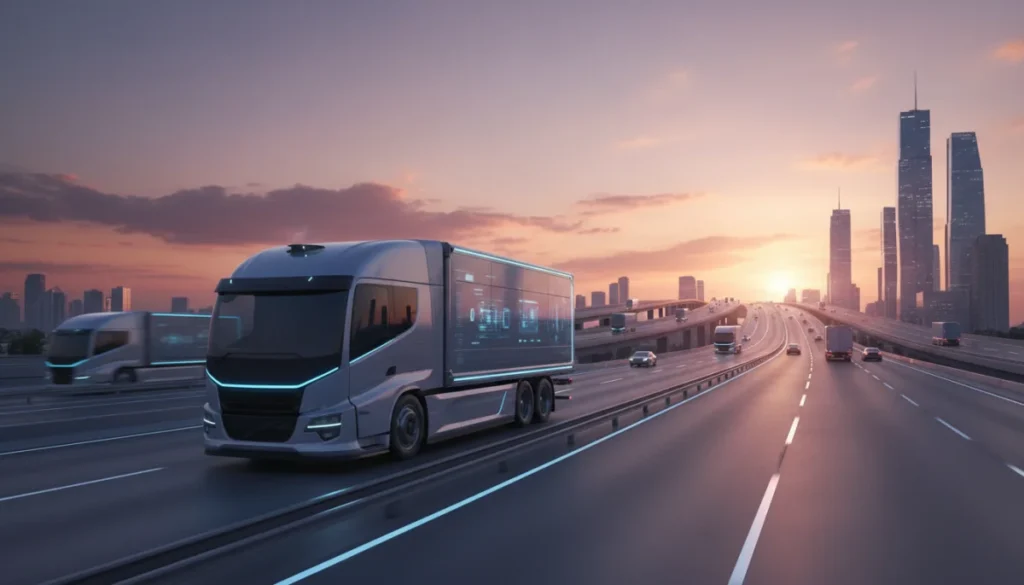
The rapid advancement of autonomous trucking in 2026 signals an imminent transformation of the logistics sector, directly influencing the roles and job security of human drivers within the next six months as pilot programs expand and legislative frameworks adapt.
As we navigate towards the midway point of 2026, the landscape of transportation is undergoing a profound transformation. The rise of autonomous trucking in 2026 is no longer a distant futuristic concept but a tangible reality reshaping the industry. This article delves into what the next six months mean for human drivers and their job security amidst these revolutionary changes.
The current state of autonomous trucking technology
The autonomous trucking sector is experiencing unprecedented growth and technological breakthroughs. Companies are investing heavily in advanced sensor suites, artificial intelligence, and sophisticated mapping systems to enhance the capabilities and safety of self-driving trucks. These advancements are pushing the boundaries of what autonomous vehicles can achieve on public roads, moving beyond controlled environments to real-world scenarios.
In the past year, we have seen numerous pilot programs expand across various states, particularly in the Sun Belt regions where weather conditions are often more favorable for sensor reliability. These programs are not just about testing the technology; they are about integrating these vehicles into existing logistics networks and demonstrating their operational efficiency and safety. The data collected from these trials is crucial for refining the technology and building public and regulatory confidence.
Key technological advancements driving adoption
- Lidar and Radar Systems: These systems provide highly accurate 3D mapping and object detection, crucial for navigating complex road conditions and adverse weather.
- Artificial Intelligence and Machine Learning: AI algorithms are continuously learning from vast datasets, improving decision-making capabilities and predictive analysis for safer driving.
- High-Definition Mapping: Detailed, constantly updated maps allow autonomous trucks to understand their environment with extreme precision, anticipating turns, lane changes, and road features.
- Vehicle-to-Infrastructure (V2I) Communication: Emerging V2I technologies enable trucks to communicate with smart road infrastructure, enhancing traffic flow and safety.
The current state of autonomous trucking technology is characterized by a rapid evolution, with continuous improvements in reliability, safety, and operational efficiency. These technological leaps are setting the stage for broader deployment and significantly influencing the discussion around their impact on human labor in the coming months.
Impact on human drivers in the next six months
The immediate future for human truck drivers is marked by a period of adjustment and evolving roles. While some might fear widespread job displacement, the reality for the next six months is likely to be more nuanced, focusing on a transition rather than an abrupt overhaul. Companies are looking at phased implementations, which may initially create new types of jobs rather than immediately eliminating existing ones.
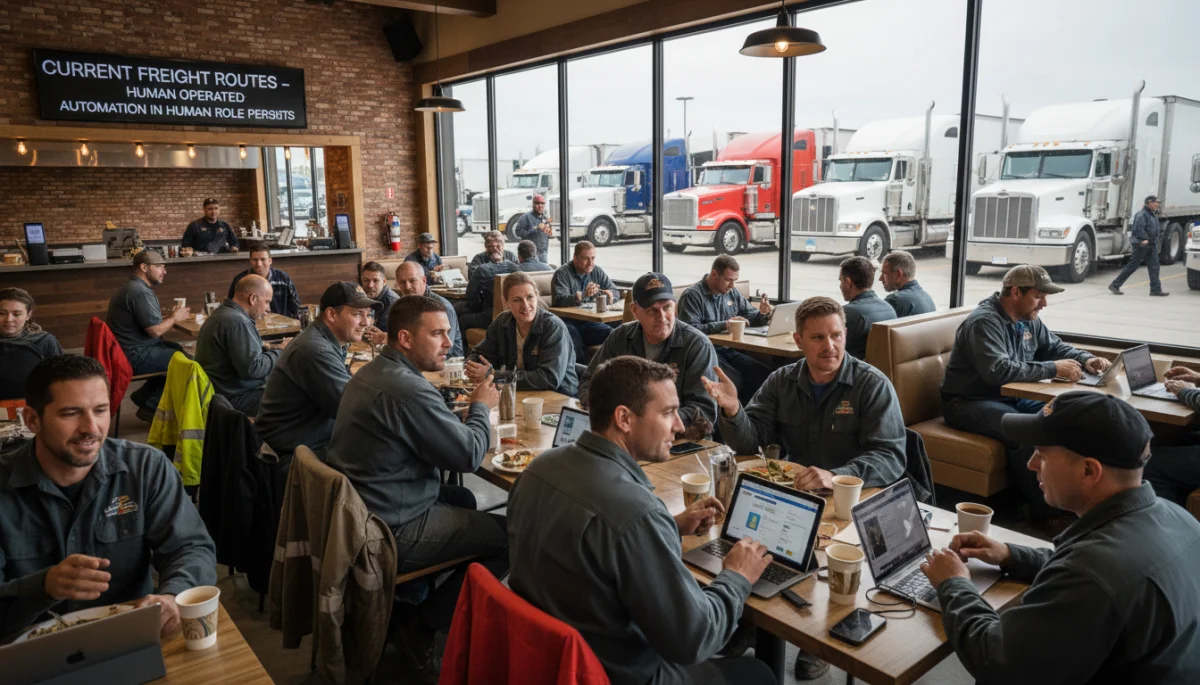
Many industry experts predict that autonomous trucks will first be deployed on long-haul routes, particularly on highways, handling the most predictable segments of a journey. This strategy aims to maximize efficiency and mitigate risks associated with complex urban driving. This means that human drivers might see a shift in their responsibilities, potentially focusing more on shorter, last-mile deliveries, or supervising autonomous operations. The demand for human drivers for these specific tasks is expected to remain robust.
Emerging roles and responsibilities
- Local and regional delivery specialists: Human drivers will continue to be essential for navigating urban environments and making deliveries to specific locations.
- Supervisory and remote operators: New roles may emerge for drivers to monitor autonomous trucks remotely, intervening when necessary, or taking control in challenging situations.
- Maintenance and technical support: The increasing complexity of autonomous vehicles will require a specialized workforce for maintenance, diagnostics, and repairs.
- Mixed fleet management: Human drivers will be crucial in managing fleets that combine both autonomous and traditional trucks, optimizing routes and schedules.
For human drivers, the next six months will be a critical period for understanding these shifts and considering opportunities for skill development. Adaptability will be key, as the industry begins to integrate these new technologies more deeply into daily operations.
Job security: re-skilling and new opportunities
The conversation around job security in the face of autonomous trucking often focuses on potential losses, but it is equally important to highlight the opportunities for re-skilling and the emergence of new roles. The trucking industry has always adapted to technological changes, from diesel engines to GPS navigation, and autonomous technology represents the next significant evolution.
For human drivers, proactive engagement with training programs will be vital. Many trucking companies and educational institutions are beginning to offer courses focused on operating alongside autonomous systems, understanding their diagnostics, and performing supervisory roles. These programs are designed to equip drivers with the skills needed to thrive in a hybrid fleet environment, where human-driven and self-driving trucks coexist.
Training and career paths
- Autonomous vehicle operation certification: Programs that train drivers to oversee and manage autonomous truck operations.
- Logistics and dispatch technology: Courses focusing on advanced software for route optimization, fleet management, and data analysis.
- Maintenance of advanced vehicle systems: Training in diagnosing and repairing the complex electronic and software components of autonomous trucks.
- Safety and compliance for autonomous fleets: Specialization in ensuring autonomous operations meet all regulatory and safety standards.
The next six months will likely see an increased emphasis on these re-skilling initiatives. Human drivers who embrace these new learning opportunities will be well-positioned to secure their future in an evolving industry, transitioning from traditional driving to more technologically integrated roles.
Regulatory landscape and public acceptance
The pace of autonomous trucking adoption is heavily influenced by the regulatory landscape and public acceptance. In the United States, various states are adopting different approaches to autonomous vehicle legislation, creating a patchwork of rules that companies must navigate. Federal guidelines are also evolving, aiming to provide a more unified framework for testing and deployment.
Public acceptance is another critical factor. Concerns about safety, job displacement, and the ethical implications of AI-driven vehicles need to be addressed through transparent communication and a demonstrated track record of safety. The industry is working to build trust through rigorous testing, public demonstrations, and collaboration with local communities.
Key regulatory and public considerations
- State-level legislation: Variations in state laws regarding autonomous vehicle operation, requiring companies to tailor their deployment strategies.
- Federal oversight: The National Highway Traffic Safety Administration (NHTSA) is developing standards and guidelines for autonomous trucking, focusing on safety and performance.
- Public perception and safety concerns: Addressing fears about accidents, cybersecurity, and the reliability of autonomous systems through clear communication and proven results.
- Insurance and liability frameworks: Establishing clear guidelines for insurance coverage and liability in the event of incidents involving autonomous trucks.
Over the next six months, we anticipate further developments in regulatory clarity, which will either accelerate or temper the pace of autonomous truck integration. Public education and consistent safety records will be paramount in fostering broader acceptance.
Economic implications for the trucking industry
The economic implications of autonomous trucking extend far beyond individual job roles, touching upon operational costs, supply chain efficiency, and overall industry profitability. Companies deploying autonomous trucks anticipate significant reductions in labor costs, fuel consumption through optimized driving, and potentially lower insurance premiums over time as safety records improve.
These economic benefits are a primary driver for the rapid investment in autonomous technology. Reduced operating expenses can lead to more competitive pricing for shipping services, potentially boosting economic activity by making logistics more affordable and efficient. However, the initial capital expenditure for autonomous truck fleets is substantial, requiring significant upfront investment from companies.
Economic benefits and challenges
- Reduced operational costs: Lower labor expenses, optimized fuel efficiency, and decreased maintenance due to smoother driving patterns.
- Increased efficiency and speed: Autonomous trucks can operate for longer hours without requiring breaks, leading to faster delivery times and improved supply chain fluidity.
- Capital investment: High initial costs for purchasing autonomous vehicles and implementing necessary infrastructure.
- Market competition: Companies adopting autonomous technology early may gain a significant competitive advantage, potentially pressuring others to follow suit.
In the coming six months, we will likely see initial data emerging from early adopters, providing clearer insights into the real-world economic impacts. This data will be crucial for guiding future investment decisions and policy formulations within the trucking industry.
Future outlook: beyond the next six months
While the focus on the immediate six months is crucial for understanding current shifts, it is equally important to consider the longer-term trajectory of autonomous trucking. Beyond the initial deployment phases, the industry anticipates a more widespread integration of these technologies, fundamentally altering the nature of freight transportation.
The vision for the future includes highly automated logistics hubs, seamless transitions between human-driven and autonomous segments, and potentially entirely new business models for freight delivery. This long-term outlook suggests a continued evolution of job roles, with a greater emphasis on technical skills, data analysis, and oversight of complex automated systems.
Innovation will not cease; rather, it will accelerate. We can expect continuous improvements in autonomous capabilities, including enhanced performance in diverse weather conditions and more sophisticated urban driving. The collaboration between technology developers, logistics providers, and regulatory bodies will be key to unlocking the full potential of this transformative technology.
Long-term industry transformation
- Fully integrated logistics networks: Autonomous trucks working in conjunction with automated warehouses and distribution centers.
- New service offerings: Development of specialized autonomous freight services, including on-demand and expedited shipping.
- Global impact: Autonomous trucking becoming a standard practice in international logistics, improving global trade efficiency.
- Workforce evolution: A shift towards a highly skilled, technologically proficient workforce in the trucking and logistics sectors.
The period beyond the next six months will see autonomous trucking mature into a foundational element of the global supply chain, continuously reshaping job markets and creating new demands for a skilled, adaptable workforce.
| Key Aspect | Brief Description |
|---|---|
| Driver Roles | Shift towards supervisory, last-mile, and maintenance roles. |
| Job Security | Emphasis on re-skilling for new opportunities, not immediate mass displacement. |
| Regulatory Progress | Evolving state and federal guidelines influencing deployment speed. |
| Economic Impact | Potential for reduced costs and increased efficiency in logistics. |
Frequently asked questions about autonomous trucking in 2026
No, it is highly unlikely that autonomous trucks will completely replace human drivers within the next six months. The current phase involves phased deployment, primarily on long-haul highway routes. Human drivers will remain crucial for local deliveries, complex urban navigation, and supervisory roles as the technology matures and integrates into existing logistics systems.
New opportunities for human drivers are expected to emerge in roles such as remote supervision of autonomous fleets, last-mile delivery specialists, and technicians for the maintenance and repair of advanced autonomous systems. There will also be a demand for professionals in data analysis and logistics management for hybrid fleets.
Human drivers can prepare by seeking re-skilling and training programs focused on autonomous vehicle operations, advanced logistics software, and technical maintenance. Staying informed about industry trends and engaging with companies that offer these new roles will also be beneficial for career transition.
Autonomous trucks are designed to reduce human error, which is a major factor in accidents. While still in testing and early deployment, proponents argue they can achieve higher safety standards over time due to consistent adherence to rules, faster reaction times, and objective decision-making. However, robust testing and regulatory oversight are crucial for validating these claims.
One of the biggest challenges for widespread autonomous trucking adoption is navigating the complex and varied regulatory landscape across different states and countries. Additionally, gaining public trust and addressing concerns about job security and safety are significant hurdles that the industry must overcome to achieve full-scale integration.
Conclusion
The progression of autonomous trucking in 2026 signifies a pivotal moment for the transportation sector. While the next six months will bring notable changes, the immediate future for human drivers is more about adaptation and re-skilling than outright displacement. The industry is poised for a transformative period, where technological innovation and human ingenuity will converge to redefine the future of logistics. Staying informed and proactive will be essential for all stakeholders in navigating this exciting new era.
