2026 Aerodynamic Innovations: US Team Design Advantage
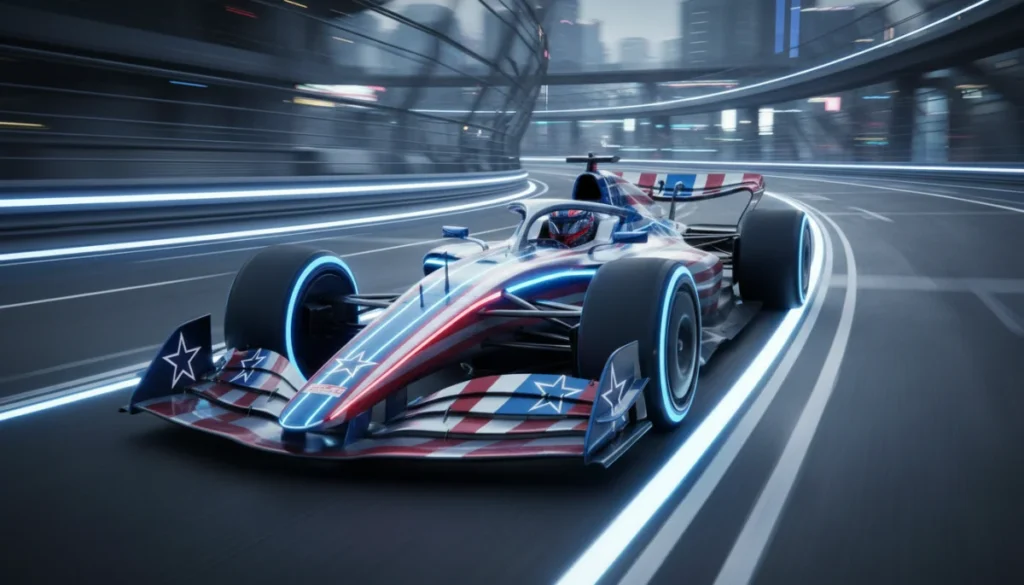
The 2026 F1 aerodynamic regulations are poised to significantly impact car design, with new rules potentially benefiting specific US team approaches and offering an estimated 1.5% performance boost, reshaping the competitive landscape.
The world of Formula 1 is constantly evolving, with every regulatory change bringing a fresh wave of innovation and strategic shifts. As we look towards the 2026 season, the new aerodynamic regulations are set to be a game-changer, promising to redefine car performance and potentially favor particular design philosophies. This deep dive will explore how these aerodynamic innovations for 2026 could specifically benefit US team designs, leading to an estimated 1.5% boost in performance and a thrilling new era for the sport.
Understanding the 2026 Aerodynamic Revolution
The upcoming 2026 Formula 1 season is not just another year; it marks a significant paradigm shift in car design, primarily driven by a complete overhaul of aerodynamic regulations. These changes are engineered to promote closer racing, reduce reliance on dirty air, and create a more sustainable sport. The core philosophy behind these rules is to make cars lighter, more agile, and less dependent on complex aerodynamic devices that generate massive downforce but also create significant turbulence for following cars.
Central to these regulations is the introduction of active aerodynamics, a feature that will allow drivers to adjust wing elements on the fly. This dynamic approach aims to balance straight-line speed with cornering grip, offering a fascinating new dimension to car setup and race strategy. The front and rear wings will be adjustable, enabling cars to reduce drag on straights and increase downforce in corners. This adaptability is expected to open up new avenues for innovative design, particularly for teams with a strong emphasis on computational fluid dynamics (CFD) and real-time data analysis.
Furthermore, the regulations are targeting a reduction in overall car weight and size, which inherently impacts aerodynamic efficiency. Lighter cars are more responsive, and smaller footprints can simplify aerodynamic flow, making it easier to manage wake turbulence. These foundational changes set the stage for teams to re-evaluate their entire design philosophy, moving away from the ground-effect-heavy designs of recent years towards a more balanced approach that emphasizes mechanical grip and efficient airflow management.
The 2026 regulations represent a bold step towards a future where F1 cars are not just faster, but also smarter and more engaging for both drivers and fans. The emphasis on active aerodynamics and reduced complexity aims to create a more level playing field, where ingenious design solutions, rather than sheer financial might, could dictate success.
Key Aerodynamic Changes and Their Impact
The 2026 regulations introduce several critical aerodynamic changes that will fundamentally alter how F1 cars generate downforce and manage airflow. These changes are not incremental; they represent a significant departure from current design principles, forcing engineers to rethink every surface and contour of the car.
Active Aerodynamics: A New Frontier
- Adjustable Front and Rear Wings: Drivers will have the ability to toggle between two modes – a low-drag mode for straights and a high-downforce mode for corners. This dynamic adjustment is designed to improve overtaking opportunities and reduce the impact of turbulent air.
- Strategic Implementation: The activation of these modes will be governed by specific zones on the track, similar to current DRS zones, but with broader application. Teams will need to master the timing and mechanics of these adjustments for optimal performance.
- Design Challenges: Integrating reliable mechanical systems for active aero without adding significant weight or complexity will be a major engineering hurdle.
Simplified Bodywork and Underfloor
The new rules aim to simplify the car’s bodywork, particularly around the floor and diffuser. The intention is to reduce the sensitivity of cars to dirty air, making it easier for them to follow closely. This simplification means less reliance on intricate underbody channels and vortex generators, pushing designers to find efficiency through cleaner, more fundamental aerodynamic shapes. The focus shifts to generating downforce in a more forgiving manner, reducing the performance drop when running behind another car.
Reduced Wake Turbulence
One of the primary goals of the 2026 regulations is to minimize the disruptive wake turbulence generated by F1 cars. This is achieved through a combination of simplified bodywork, revised wing profiles, and potentially changes to wheel fairings. By cleaning up the airflow behind the car, the regulations hope to enable drivers to race wheel-to-wheel more effectively, leading to more exciting and competitive battles on track. This focus on reducing turbulent air is a direct response to years of driver feedback about the difficulty of following closely in current-generation cars.
These key changes collectively demand a complete re-evaluation of aerodynamic design. Teams that can adapt quickly to the new philosophy, particularly those with strong simulation capabilities, will likely gain an early advantage. The emphasis is on efficiency, adaptability, and cleaner airflow, moving away from complex, high-downforce solutions that have characterized recent F1 eras.
Why US Team Designs Might Thrive
The unique characteristics of US team designs, often rooted in a distinct engineering culture and technological approach, could find a surprisingly fertile ground under the new 2026 aerodynamic regulations. While Formula 1 is a global sport, the American approach to motorsports engineering, particularly its emphasis on data-driven design, simulation, and adaptable solutions, aligns well with the direction of the new rules.
Emphasis on Data and Simulation
American motorsport, from IndyCar to NASCAR, has a strong tradition of leveraging advanced data analytics and simulation tools for car development. This culture of intense digital prototyping and virtual testing is perfectly suited for the 2026 regulations, especially with the introduction of active aerodynamics. Teams with robust CFD capabilities and sophisticated simulation platforms will be able to rapidly iterate and optimize designs for varying track conditions and active aero configurations. This iterative design process, where virtual models are refined before physical prototypes are even built, is a cornerstone of modern American engineering.
Adaptability and Versatility
US motorsport often demands cars that are versatile across different track types, from ovals to road courses. This inherent need for adaptability in design translates well to the 2026 F1 rules, which prioritize dynamic aerodynamic adjustments. Teams accustomed to designing cars that can be significantly reconfigured for diverse challenges may find it easier to integrate and optimize active aerodynamic systems that need to perform optimally in both high-downforce and low-drag settings. This contrasts with some traditional F1 approaches that have historically focused on maximizing peak downforce in a more static configuration.
A Focus on Engineering Efficiency
With regulations aimed at reducing overall car weight and simplifying bodywork, the emphasis shifts towards engineering efficiency – extracting maximum performance from simpler, lighter components. American engineering often champions pragmatic, efficient solutions, sometimes prioritizing robust functionality over extreme complexity. This mindset could lead to elegant and effective aerodynamic solutions that meet the new regulations without falling into the trap of over-engineering, which can add unnecessary weight and introduce reliability issues. The 1.5% performance boost estimate is not just about raw downforce, but about achieving that downforce with greater efficiency and less drag.
The combination of a strong simulation culture, a history of adaptable designs, and a focus on engineering efficiency positions US teams to potentially capitalize on the 2026 aerodynamic regulations. Their unique approach could lead to innovative solutions that effectively navigate the new rules and propel them to competitive success.
The Role of Active Aerodynamics in US Success
The introduction of active aerodynamics in 2026 is arguably the most significant regulatory change, and it’s where US team designs could truly shine. This innovation moves F1 cars beyond static aerodynamic profiles, demanding a dynamic and intelligent approach to managing airflow. American engineering, with its strong foundation in systems integration, real-time control, and software development, is uniquely positioned to excel in this new era.
Software and Control Systems Expertise
Modern US engineering, heavily influenced by industries like aerospace and defense, possesses deep expertise in developing sophisticated software and control systems. Active aerodynamics will require precise, rapid, and reliable control over movable wing elements. This involves complex algorithms to determine optimal wing angles based on speed, steering input, and track conditions, all executed in milliseconds. US teams with access to top-tier software engineers and control system specialists could develop highly efficient and responsive active aero systems that outperform rivals.
Simulation and Predictive Modeling
Optimizing active aerodynamics is not just about moving parts; it’s about predicting how those movements will interact with the airflow at every point on the track. This demands advanced simulation and predictive modeling. US teams often invest heavily in these areas, using high-fidelity digital twins and machine learning to understand and exploit complex aerodynamic behaviors. This capability allows for rapid prototyping and testing of active aero strategies in virtual environments, minimizing costly physical wind tunnel time and accelerating development cycles.

Integrated Design Philosophy
The success of active aerodynamics hinges on a fully integrated design approach, where mechanical, electrical, and software components work seamlessly together. US engineering culture often promotes interdisciplinary collaboration from the outset of a project, fostering an environment where complex systems are designed holistically. This integrated philosophy can lead to more robust, lighter, and more effective active aero solutions, where the entire car acts as a single, dynamic aerodynamic entity rather than a collection of separate parts.
The ability to harness active aerodynamics effectively could be the distinguishing factor in 2026. US teams, with their particular strengths in software, simulation, and integrated systems design, are well-placed to unlock the full potential of these dynamic aero elements, contributing significantly to the estimated 1.5% performance advantage.
The 1.5% Performance Boost: A Closer Look
The estimated 1.5% performance boost attributable to the 2026 aerodynamic innovations, particularly favoring specific US team designs, is a significant figure in the hyper-competitive world of Formula 1. While seemingly small, even a fraction of a percent can translate to critical tenths of a second per lap, which can be the difference between winning and losing. This performance gain isn’t a single, isolated factor but rather a cumulative effect of several interconnected advantages.
Optimized Drag Reduction
A major component of the performance boost comes from the ability to significantly reduce drag on straights using active aerodynamics. By flattening wings, cars can achieve higher top speeds with less power, leading to faster lap times. US teams, with their potential for superior active aero integration and control, could maximize this drag reduction more effectively, gaining an edge in acceleration and terminal velocity on key straights.
Enhanced Cornering Efficiency
Conversely, the rapid deployment of high-downforce settings in corners allows for greater grip and higher cornering speeds. The 1.5% advantage could stem from US teams’ ability to transition more smoothly and precisely between low-drag and high-downforce configurations, optimizing their cornering lines and carrying more speed through the technical sections of a track. This seamless transition requires sophisticated control systems and a deep understanding of aerodynamic load management.
Fuel Efficiency and Tire Management
Beyond raw speed, aerodynamic efficiency also plays a crucial role in fuel consumption and tire degradation. A more aerodynamically efficient car requires less energy to achieve a given speed, leading to better fuel economy. This could translate into lighter fuel loads at the start of a race or the ability to push harder for longer stints. Furthermore, optimized downforce management can reduce tire slip and overheating, leading to better tire longevity and more consistent performance over a race distance. These subtle gains, when compounded, contribute significantly to overall race performance and strategic flexibility.
The 1.5% performance boost is thus a multifaceted gain, reflecting not just outright speed but also improved efficiency, strategic advantages, and better race management. Teams that can fully exploit the new aerodynamic opportunities, particularly those with a strong foundation in active aero and integrated systems, will be the ones to reap these rewards.
Challenges and Opportunities for All Teams
While the 2026 aerodynamic regulations present unique opportunities for US team designs, they also introduce a significant set of challenges and opportunities for every team on the grid. The complete overhaul demands a fresh approach to car development, leveling the playing field to some extent and forcing all constructors to innovate.
Steep Learning Curve
All teams will face a steep learning curve in understanding and optimizing the new regulations, especially the active aerodynamic components. This requires significant investment in research and development, computational resources, and specialized engineering talent. Teams that can quickly adapt their design philosophies and simulation tools to the new paradigm will gain a crucial head start. The complexity of integrating movable parts into structural elements while maintaining reliability and minimizing weight is a universal challenge.
Resource Allocation and Budget Cap
Under the budget cap, teams must be strategic about resource allocation. Developing a completely new aerodynamic package, including active systems, requires substantial financial and human capital. Teams will need to prioritize where they invest their resources, balancing the development of the new aero package with other critical areas like power unit integration and chassis design. This constraint could favor teams with more efficient development processes and those capable of making smart, high-impact design decisions early on.
Unforeseen Design Implications
New regulations often lead to unforeseen design implications and unexpected performance advantages. Engineers will be pushing the boundaries of interpretation, and it’s likely that innovative solutions will emerge that were not explicitly anticipated by the rule makers. This creates an exciting opportunity for any team, regardless of their current standing, to stumble upon a breakthrough concept that could redefine competitiveness. The initial phases of the 2026 season will likely see rapid development as teams learn from each other and refine their designs.
Ultimately, the 2026 regulations represent a reset button for Formula 1 aerodynamics. While certain characteristics of US team designs might offer an inherent advantage, success will ultimately depend on every team’s ability to innovate, adapt, and execute under the new rules. The challenges are significant, but so are the opportunities for those who can master the new aerodynamic landscape.
The Future Landscape of F1 Aerodynamics
The 2026 aerodynamic regulations are not merely a set of new rules; they are a vision for the future of Formula 1. This vision emphasizes sustainability, closer racing, and technological innovation, moving the sport into an era where dynamic aerodynamics and efficient design are paramount. The impact will extend far beyond the immediate performance gains, shaping the long-term trajectory of F1 engineering.
Increased Driver Skill Emphasis
With active aerodynamics, driver skill will become even more critical. The ability to manage the active aero systems effectively, making split-second decisions on wing adjustments, will add another layer of complexity and nuance to driving. This could differentiate top drivers even further, as they master the art of optimizing the car’s aerodynamic profile for every corner and straight. The driver’s input will directly influence the car’s aerodynamic performance in real-time, making them an even more integral part of the overall package.
Technological Crossover
The advanced technologies developed for active aerodynamics, control systems, and lightweight efficient structures could have significant crossover applications in other industries. Formula 1 has always been a hotbed of innovation, and the 2026 regulations will likely accelerate advancements in areas like adaptive materials, fluid dynamics simulation, and real-time data processing. This technological transfer benefits not just motorsport but also broader engineering and scientific fields.
A More Sustainable Approach
The lighter, more efficient cars envisioned by the 2026 regulations align with F1’s broader sustainability goals. Reduced drag and optimized energy usage contribute to greater fuel efficiency, supporting the sport’s commitment to reducing its carbon footprint. While the primary focus is on performance, the underlying principles of efficiency and smart design contribute to a more environmentally conscious approach to racing, setting a precedent for future motorsport regulations.
The future of F1 aerodynamics is one of continuous innovation, driven by a blend of performance demands, technological advancements, and a growing emphasis on sustainability. The 2026 regulations are a pivotal moment, promising a more dynamic, engaging, and technologically rich era for Formula 1, where the mastery of airflow will continue to be the ultimate pursuit.
| Key Aspect | Brief Description |
|---|---|
| Active Aerodynamics | Adjustable front/rear wings for dynamic drag reduction and downforce generation. |
| US Team Advantage | Strong emphasis on data, simulation, and integrated system design aligns with new rules. |
| Performance Boost | Estimated 1.5% gain from optimized drag, cornering, and efficiency. |
| Simplified Bodywork | Aims to reduce dirty air and promote closer, more competitive racing. |
Frequently Asked Questions About 2026 F1 Aerodynamics
The primary goals are to promote closer racing by reducing dirty air, make cars lighter and more agile, and introduce active aerodynamics for dynamic performance adjustments. These changes aim for a more sustainable and exciting sport, fostering innovation in car design and driver skill.
Drivers will be able to adjust elements of both the front and rear wings. This allows for a low-drag mode on straights for higher speeds and a high-downforce mode in corners for better grip. These adjustments will be strategically controlled in designated zones.
US teams often possess strong expertise in data analytics, advanced simulation, and integrated software/control systems. This engineering culture is particularly well-suited for optimizing active aerodynamics and efficient design under the new, dynamic regulations, potentially giving them an edge.
This boost comes from a combination of optimized drag reduction on straights, enhanced cornering efficiency, and better fuel/tire management due to more efficient aerodynamic designs. Even small percentage gains are crucial in F1’s competitive environment.
All teams face a steep learning curve in adapting to active aerodynamics and simplified bodywork. Resource allocation under the budget cap and anticipating unforeseen design implications are also major challenges that require strategic innovation and efficient development.
Conclusion
The 2026 Formula 1 season stands on the precipice of a transformative era, largely driven by its ambitious new aerodynamic regulations. These changes, centered around active aerodynamics and a push for lighter, more efficient cars, promise to reshape the competitive landscape. While the challenges for all teams are substantial, the inherent strengths in data-driven design, simulation, and integrated systems found within US engineering culture could provide a distinct advantage, potentially leading to an estimated 1.5% performance boost. This evolution signals a future where F1 cars are not just marvels of speed, but also paragons of dynamic intelligence and sustainable engineering, promising an exhilarating chapter for the sport and its global fanbase.
