F1 Team Factories: 3 Key Upgrades for 2026 Production Unveiled

Formula 1 team factories are undergoing significant transformations with three crucial upgrades for 2026 production, driven by new regulations and the relentless pursuit of competitive advantage, impacting car design, manufacturing processes, and operational efficiency.
The world of Formula 1 is constantly evolving, and as we approach the 2026 season, the intensity behind the scenes at team factories is reaching new heights. This deep dive explores the critical transformations and strategic investments being made in F1 team factories, focusing on F1 factory upgrades 2026 that are set to redefine car production and competitive edge.
The 2026 regulatory overhaul and its factory impact
The impending 2026 Formula 1 regulations represent one of the most significant shifts in the sport’s history, particularly concerning power units and chassis design. These changes are not just about what happens on the track; they fundamentally reshape how F1 cars are conceived, designed, and manufactured within the highly secretive factory walls.
Teams are investing heavily in new infrastructure and methodologies to meet these stringent new demands. The regulatory framework for 2026 emphasizes sustainable fuels, simplified power unit architecture, and active aerodynamics, all of which necessitate a complete rethinking of manufacturing processes and material science. Factories are becoming hubs of advanced research and development, blending traditional engineering with cutting-edge digital tools.
Power unit evolution and manufacturing challenges
The revised power unit regulations for 2026, which include an increased electrical component and a move to 100% sustainable fuels, present immense manufacturing hurdles. This isn’t merely an engine upgrade; it’s a paradigm shift requiring new production lines and specialized equipment.
- Battery production: The increased electrical power demands more sophisticated battery design and manufacturing capabilities, often requiring temperature-controlled environments and advanced assembly techniques.
- Combustion engine re-design: While simplified, the internal combustion engine must be optimized for sustainable fuels, pushing material science and precision machining to their limits.
- Integration complexities: Marrying the new combustion engine, MGU-K, MGU-H (if retained in a modified form), and battery into a cohesive, reliable, and lightweight package demands unprecedented levels of integration and testing in factory settings.
The factory floor is where these complex components come together, undergoing rigorous testing and quality control. The ability of a factory to rapidly prototype, test, and refine these new power units will be a significant differentiator among teams.
The 2026 regulations are forcing teams to reconsider every aspect of their manufacturing pipeline, from raw material sourcing to final assembly. The factories are evolving from mere production facilities into advanced innovation centers, designed to tackle the unique challenges posed by the sport’s future direction.
Upgrade 1: Advanced Additive Manufacturing and Material Science
One of the most transformative F1 factory upgrades 2026 is the widespread adoption and refinement of advanced additive manufacturing, commonly known as 3D printing, combined with breakthroughs in material science. This isn’t just for rapid prototyping anymore; it’s central to producing flight-ready components.
F1 teams are pushing the boundaries of what’s possible with 3D printing, utilizing exotic alloys and composite materials to create parts that are lighter, stronger, and more complex than ever before. This technology allows for intricate internal geometries previously impossible to achieve with traditional subtractive manufacturing methods, leading to significant performance gains.
Revolutionizing component production
The ability to print complex parts on demand has a profound impact on the entire development cycle. It shortens lead times, reduces waste, and enables rapid iteration of designs, a crucial advantage in the fast-paced world of F1.
- Lightweight structures: Additive manufacturing facilitates the creation of ultra-lightweight components with optimized lattice structures, crucial for weight distribution and overall car performance.
- Aerodynamic efficiency: Intricate aerodynamic surfaces and internal ducting can be precisely manufactured, fine-tuning airflow for maximum downforce and minimal drag.
- Customization and iteration: Teams can quickly print modified versions of parts to test new designs or adapt to specific track requirements, accelerating the development feedback loop.
Material science advancements go hand-in-hand with additive manufacturing. New carbon fiber weaves, ceramic composites, and specialized metal alloys are being developed and integrated, offering superior strength-to-weight ratios and enhanced thermal properties. These materials are often bespoke, developed in collaboration with leading material research institutions.
The investment in sophisticated 3D printers, including selective laser melting (SLM) for metals and stereolithography (SLA) for resins, is a clear indicator of this trend. Factories are becoming increasingly self-sufficient in producing highly specialized components, reducing reliance on external suppliers and enhancing control over intellectual property.
Upgrade 2: Hyper-Integrated Digital Simulation and AI
The second major upgrade transforming F1 factory upgrades 2026 involves hyper-integrated digital simulation platforms powered by artificial intelligence (AI). This isn’t just about running CFD (Computational Fluid Dynamics) or FEA (Finite Element Analysis) simulations in isolation; it’s about creating a unified digital twin of the entire car and its performance envelope.
AI algorithms are now capable of processing vast amounts of data from past races, test sessions, and design iterations, identifying patterns and predicting performance characteristics with unprecedented accuracy. This allows engineers to explore a far wider range of design possibilities in the virtual world before committing to physical production.
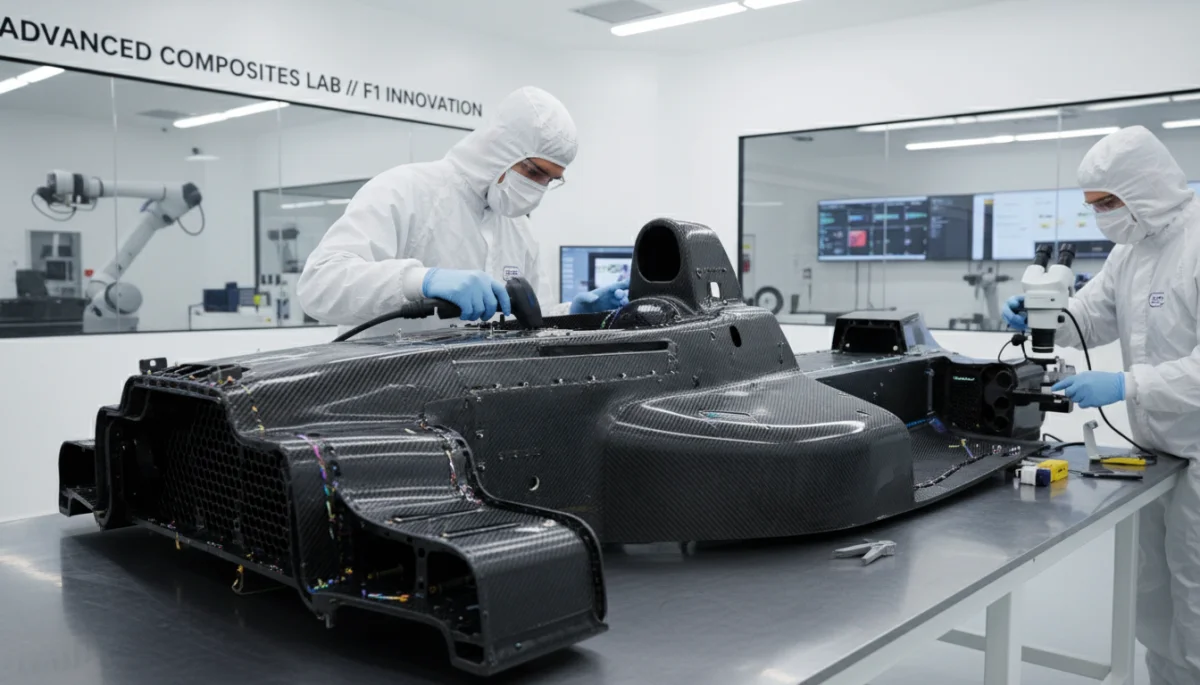
This digital integration extends beyond individual components, encompassing the entire vehicle system. From suspension dynamics to power unit efficiency and aerodynamic interaction, every aspect is modeled and simulated concurrently, providing a holistic view of the car’s behavior.
AI-driven design optimization
AI’s role is particularly critical in optimizing complex design parameters that human engineers might overlook. Generative design tools, guided by AI, can propose novel solutions that meet specific performance criteria, often leading to innovative and unconventional designs.
- Aerodynamic optimization: AI can analyze millions of airflow simulations, identifying minute changes in surface geometry that yield significant aerodynamic gains.
- Structural integrity: Predictive modeling uses AI to assess the structural integrity of components under various load conditions, reducing the risk of failure and optimizing material usage.
- Strategy and setup: Beyond car design, AI assists in race strategy formulation and car setup optimization, learning from historical data and predicting track conditions.
The factory’s simulation department is no longer just a support function; it’s a central pillar of the design process. High-performance computing clusters and advanced visualization tools are becoming standard, enabling engineers to interact with their digital models in highly immersive ways. This digital twin approach allows for extensive virtual testing, significantly reducing the need for costly and time-consuming physical prototypes.
The synergy between human intuition and AI-driven analysis is creating a powerful design methodology, where engineers can leverage AI to explore design spaces far beyond human capability, leading to more radical and effective solutions for the 2026 cars.
Upgrade 3: Automated Quality Control and Robotics Integration
The third pivotal upgrade within F1 factory upgrades 2026 is the extensive integration of robotics and automated quality control systems. As F1 cars become more complex and the tolerances tighter, human inspection alone is no longer sufficient to guarantee the required level of precision and consistency.
Robotic arms equipped with advanced sensors, laser scanners, and optical measurement systems are now performing meticulous inspections of every component, from the smallest fastener to entire chassis assemblies. These systems can detect microscopic flaws or deviations from design specifications that would be invisible to the human eye, ensuring unparalleled quality.
This automation extends beyond inspection to the manufacturing process itself. Collaborative robots (cobots) are assisting technicians with repetitive or highly precise tasks, improving efficiency and consistency. From precise drilling and cutting of composite materials to automated painting and assembly, robotics are streamlining the production line.
Precision and efficiency gains
The benefits of this automation are multi-faceted, leading to significant improvements in both the quality and speed of production.
- Unmatched precision: Robots can achieve sub-millimeter accuracy consistently, vital for components that operate at the extreme limits of engineering.
- Reduced human error: Automating repetitive tasks minimizes the potential for human error, leading to more reliable and consistent parts.
- Accelerated production: Robots can operate 24/7, significantly speeding up manufacturing cycles and allowing teams to respond more quickly to design changes.
Automated material handling systems are also becoming more prevalent, efficiently moving components between different stages of production and reducing bottlenecks. The entire factory floor is becoming a highly integrated and intelligent ecosystem, where machines and humans work in concert to achieve peak performance.
The data collected by these automated systems is fed back into the digital simulation platforms, creating a closed-loop system where design, manufacturing, and quality control are continuously optimized. This continuous feedback ensures that any discrepancies are identified and addressed immediately, maintaining the highest standards of production for the cutting-edge 2026 F1 cars.
The human element: Evolving roles in F1 factories
While automation and AI are transforming F1 factories, the human element remains absolutely critical, though roles are evolving. The F1 factory upgrades 2026 are not about replacing people, but empowering them with better tools and focusing their expertise on higher-level tasks. Engineers and technicians are now becoming experts in managing complex digital systems, interpreting AI-generated insights, and overseeing sophisticated robotic operations.
The demand for highly skilled individuals in areas like data science, mechatronics, and advanced materials engineering is soaring. Teams are investing in upskilling their workforce, ensuring they can effectively leverage the new technologies and maintain their competitive edge. The human capacity for innovation, problem-solving, and strategic thinking remains irreplaceable.
Collaboration between different departments has also become more crucial. With highly integrated digital platforms, designers, aerodynamicists, power unit engineers, and manufacturing specialists must work in lockstep, often in real-time, to ensure seamless development. The factory environment is fostering a culture of interdisciplinary teamwork.
New skill sets and collaborative environments
The nature of work in an F1 factory is shifting from manual labor to intellectual and supervisory roles. Technicians now need programming skills, diagnostic capabilities for complex machinery, and an understanding of data analytics.
- Data analysts: Essential for interpreting the massive datasets generated by simulations and automated quality control, providing actionable insights.
- Robotics engineers: Crucial for programming, maintaining, and optimizing the growing fleet of robotic systems on the factory floor.
- Material scientists: Continuously researching and developing new lightweight and durable materials tailored for F1’s extreme demands.
The modern F1 factory is therefore a blend of state-of-the-art technology and highly specialized human talent. It’s a testament to the sport’s relentless pursuit of excellence that, even with increasing automation, the ingenuity and dedication of its people remain at the forefront of development. The complex interplay between human expertise and advanced machinery is what will ultimately define success in the 2026 season and beyond.
Sustainability and efficiency in 2026 F1 production
Beyond performance, sustainability and operational efficiency are increasingly driving the F1 factory upgrades 2026. With Formula 1 committing to a net-zero carbon footprint by 2030, factories are playing a significant role in achieving this ambitious goal. This involves not only the design of the cars themselves but also the entire production lifecycle.
Teams are implementing energy-efficient manufacturing processes, reducing waste through optimized material usage, and exploring renewable energy sources for their facilities. The focus on sustainable fuels for the 2026 power units is just one aspect; the manufacturing footprint must also align with the sport’s environmental objectives.
This commitment to sustainability is driving innovation in areas like material recycling, waste heat recovery, and the use of more environmentally friendly production chemicals. Factories are not just building faster cars; they are building them more responsibly.
Eco-conscious manufacturing practices
The push for sustainability is influencing every decision, from the choice of building materials for new factory extensions to the energy consumption of advanced machinery.
- Waste reduction: Optimized additive manufacturing processes significantly reduce material waste compared to traditional machining.
- Energy efficiency: Investing in modern, energy-efficient machinery and optimizing factory layouts to minimize energy consumption.
- Renewable energy: Exploring solar panels, wind turbines, and other renewable sources to power factory operations, reducing reliance on fossil fuels.
Operational efficiency goes hand-in-hand with sustainability. Lean manufacturing principles, borrowed from other high-tech industries, are being applied to streamline workflows, reduce bottlenecks, and maximize resource utilization. This holistic approach ensures that every aspect of the factory operation is optimized for both performance and environmental responsibility.
The 2026 season will not only showcase technological marvels on track but also highlight the significant strides F1 factories are making towards more sustainable and efficient production methods. This dual focus on speed and responsibility reflects a maturing sport keenly aware of its broader global impact.
The competitive landscape: Who benefits most from upgrades?
The scale and nature of F1 factory upgrades 2026 will inevitably create a fascinating competitive landscape. Teams with larger budgets and established infrastructure are likely to have a head start, being able to invest more heavily in cutting-edge additive manufacturing, AI platforms, and robotics. However, smaller teams with agile structures and innovative approaches could also make significant gains by strategically targeting specific areas of improvement.
The ability to integrate these new technologies effectively, rather than just acquiring them, will be the true differentiator. A factory is only as good as the processes and people that operate within it. Teams that can foster a culture of continuous learning, rapid adaptation, and seamless technological integration will be best positioned for success.
The 2026 regulations are designed to level the playing field to some extent, but the battle off-track, within the factory walls, will be as intense as ever. The teams that can master these production upgrades will undoubtedly gain a crucial advantage when the new era of Formula 1 begins.
Strategic investment vs. agile innovation
The approach to these upgrades varies significantly among teams, reflecting their resources and philosophies.
- Top-tier teams: Often make massive, multi-faceted investments across all upgrade areas, aiming for comprehensive superiority.
- Mid-field teams: Tend to focus on strategic, targeted upgrades that offer the best return on investment for their specific needs and existing capabilities.
- New entrants/smaller teams: May leverage external partnerships and innovative, lean processes to punch above their weight in specific technological domains.
Ultimately, the success of these factory upgrades will be measured on the racetrack. The teams that can translate their technological advancements into tangible performance gains, reliability, and efficient development cycles will be the ones challenging for championships in 2026. The factory is the crucible where champions are forged, long before the cars hit the track.
| Key Upgrade | Brief Description |
|---|---|
| Advanced Additive Manufacturing | Utilizing 3D printing for lighter, stronger, and more complex components using exotic alloys and composites. |
| Hyper-Integrated Digital Simulation & AI | Unified digital twin platforms with AI for comprehensive car design optimization and predictive performance. |
| Automated Quality Control & Robotics | Extensive use of robots and automated systems for precision inspection and assembly, ensuring unmatched quality. |
| Evolving Human Roles | Shift towards specialized roles in data science, robotics, and material engineering, enhancing human-machine collaboration. |
Frequently Asked Questions about F1 Factory Upgrades
The main drivers are the significant regulatory changes for the 2026 season, particularly concerning power units and aerodynamics, alongside the continuous pursuit of competitive advantage through technological innovation and efficiency gains.
Additive manufacturing, or 3D printing, allows for the creation of lighter, stronger, and more complex components with intricate geometries, accelerating prototyping, reducing waste, and enabling rapid design iterations for improved performance.
AI powers hyper-integrated digital simulation platforms, creating digital twins of cars. It optimizes designs, predicts performance, analyzes vast data, and assists in strategy, allowing engineers to explore more complex solutions virtually.
No, human roles are evolving. Automation frees up personnel from repetitive tasks, allowing them to focus on higher-level activities like managing complex systems, interpreting AI insights, and overseeing robotic operations, requiring new specialized skills.
Upgrades contribute by enabling energy-efficient manufacturing, reducing material waste through optimized processes like additive manufacturing, and exploring renewable energy sources for factory operations, aligning with F1’s net-zero carbon footprint target.
Conclusion
The journey to the 2026 Formula 1 season is not just about the roar of new engines; it’s profoundly shaped by the silent revolution occurring within F1 team factories. The three key upgrades – advanced additive manufacturing, hyper-integrated digital simulation with AI, and extensive robotics integration – are fundamentally reshaping how F1 cars are designed, produced, and optimized. These advancements are critical for meeting stringent new regulations, pushing performance boundaries, and driving the sport towards greater sustainability. As teams continue to innovate behind closed doors, the competitive landscape of 2026 will undoubtedly be defined by those who best harness these technological leaps, ensuring that the relentless pursuit of speed remains at the heart of Formula 1’s appeal.
